
LIQUID CHEMICALS
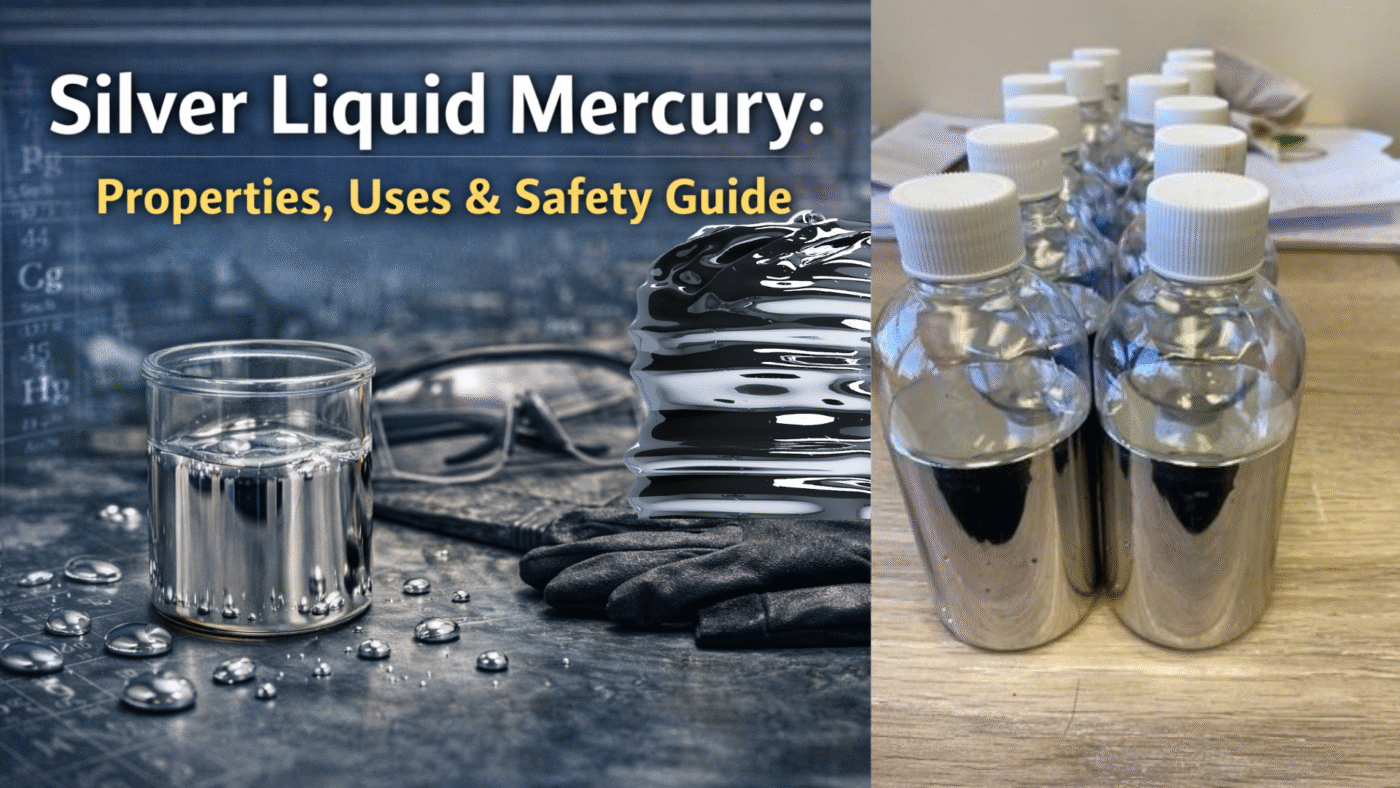
Silver Liquid Mercury: Properties, Uses & Safety Guide
Apr
Introduction
Silver Liquid Mercury is one of the few metals that exist in a liquid state at room temperature. Known scientifically as mercury, this element has been used for centuries in various industrial and scientific applications. In this detailed Silver Mercury Guide, we will explore its properties, uses, risks, and essential safety measures.
Despite its fascinating nature, mercury is also highly toxic, making proper awareness extremely important.
What is Silver Liquid Mercury?
Silver liquid mercury refers to the element mercury (Hg), a naturally occurring metal.
Key Characteristics:
- Only metal that is liquid at room temperature
- Shiny, silver appearance
- Dense and heavy
- Conducts electricity
Physical & Chemical Properties
| Property | Details |
|---|---|
| Chemical Symbol | Hg |
| State | Liquid at room temperature |
| Color | Silver |
| Density | Very high |
| Boiling Point | High |
| Toxicity | Highly toxic |
Industrial & Scientific Uses
In this Silver Mercury Guide, here are some of its traditional and modern uses:
Common Applications:
- Thermometers (historically)
- Barometers
- Electrical switches
- Fluorescent lamps
- Scientific instruments
Note: Many uses are now restricted or replaced due to safety concerns.
Health Risks & Toxicity
Mercury is extremely dangerous if mishandled.
Health Risks:
- Damage to nervous system
- Kidney issues
- Respiratory problems (vapors)
- Long-term poisoning risks
Exposure Types:
- Inhalation of vapors (most dangerous)
- Skin contact (less common but risky)
- Ingestion (highly toxic)
Safety Guidelines
Handling mercury requires strict precautions.
Safety Tips:
- Avoid direct contact
- Use protective gloves and masks
- Store in sealed containers
- Keep away from heat sources
- Handle only in controlled environments
Never handle mercury casually.
Legal & Environmental Concerns
Important Points:
- Mercury use is regulated worldwide
- Environmental pollution risk
- Disposal must follow strict guidelines
- Many countries have banned certain uses
Environmental Impact
Mercury can severely affect ecosystems.
Environmental Risks:
- Water contamination
- Bioaccumulation in fish
- Harm to wildlife
- Long-term ecological damage
Mercury vs Other Liquid Metals
| Feature | Mercury | Other Liquid Metals |
|---|---|---|
| Natural Occurrence | Yes | Rare |
| Toxicity | High | Usually lower |
| Usage | Limited now | Specialized |
| Safety | Hazardous | Varies |
Key Takeaways
- Mercury is a unique liquid metal
- Widely used historically but now restricted
- Highly toxic and dangerous
- Requires careful handling and disposal
- Environmental impact is significant
FAQs
1. Why is mercury liquid at room temperature?
Due to its atomic structure and weak bonding between atoms.
2. Is mercury still used today?
Yes, but in limited and controlled applications.
3. Is touching mercury dangerous?
Direct contact is risky; vapors are more dangerous.
4. Why is mercury banned in many products?
Because of its toxicity and environmental impact.
5. Can mercury be safely handled?
Only by trained professionals with proper safety measures.
Conclusion
This Silver Mercury Guide highlights both the unique nature and serious dangers of mercury. While it has played an important role in science and industry, its toxic nature means it must be handled with extreme caution.
Always remember:
- Safety comes first
- Follow regulations
- Avoid unnecessary exposure
Understanding mercury responsibly is essential for both health and environmental protection.
Read More:
Red Liquid Mercury: Truth, Myths & Reality Guide
GBL Gamma Butyrolactone & Butanediol (BDO)
Caluanie Muelear Oxidize: Industrial Use & Facts Guide
