
CATHINONE
N-Ethylhexedrone Crystal (NEH Hexen Crystal) – Complete Guide
Mar
Introduction
NEH Hexen Crystal refers to the crystalline form of N-Ethylhexedrone, a synthetic cathinone compound that has attracted significant attention in chemical research communities. Known for its crystalline structure and unique molecular profile, NEH Hexen Crystal has been studied for its chemical characteristics and its relation to other cathinone derivatives.
Synthetic cathinones are a group of compounds derived from the natural stimulant cathinone found in the khat plant. Over the years, researchers have explored many cathinone analogs to better understand how structural variations influence chemical behavior. Within this family, NEH Hexen Crystal stands out because of its molecular modifications and its stable crystalline appearance.
This article provides a detailed overview of Hexen Crystal, including its background, molecular profile, appearance, research interest, and why it continues to be discussed within scientific and analytical communities.
What is NEH Hexen Crystal?
NEH Hexen Crystal is the crystalline form of N-Ethylhexedrone, a synthetic compound belonging to the cathinone class. Cathinones are structurally related to phenethylamines and share similarities with other stimulant-type compounds studied in chemical laboratories.
The compound was developed as part of a broader effort to explore variations within the cathinone family. By modifying molecular components such as the side chain or amine group, chemists can observe how those adjustments affect physical and chemical properties.
In the case of NEH Hexen Crystal, the addition of an ethyl group and hexanone backbone contributes to its distinct identity among related cathinone analogs. Researchers often examine these modifications to understand trends in molecular behavior and stability.
Chemical Background and Structure
From a structural perspective, NEH Hexen Crystal belongs to the substituted cathinone category. Cathinones typically share a beta-keto phenethylamine backbone, which gives them their characteristic structure.
Key structural characteristics include:
- A phenyl ring forming the aromatic component
- A beta-keto group contributing to cathinone classification
- An ethyl substitution on the amine group
- A hexanone side chain that differentiates it from shorter-chain cathinones
These structural features influence how the compound forms crystals and how it behaves under laboratory analysis techniques such as spectroscopy or chromatography.
Because of these structural differences, NEH Hexen Crystal is often compared with other synthetic cathinones to examine how chain length and substitution affect chemical behavior.
Physical Appearance of NEH Hexen Crystal
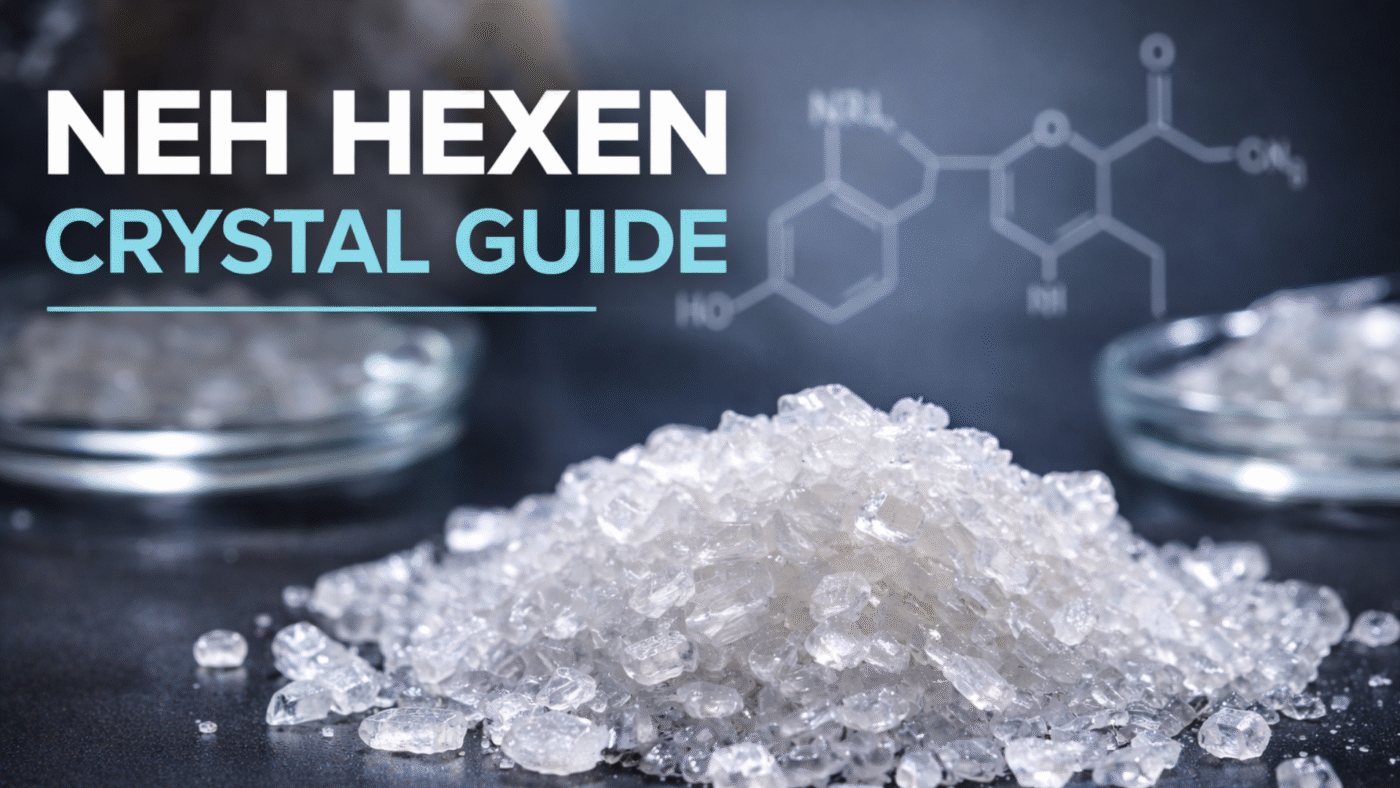
One of the most recognizable characteristics of Hexen Crystal is its crystalline form. Researchers typically describe it as having a solid crystalline texture that can vary depending on preparation conditions.
Common characteristics include:
- Transparent or white crystalline fragments
- Granular or shard-like structures
- Stable appearance under controlled storage conditions
- Uniform crystal formations when properly synthesized
Crystal morphology is an important aspect of chemical analysis. By studying crystal patterns, scientists can gain insights into molecular packing and purity levels.
For this reason, Hexen Crystal often becomes a subject of analytical observation in laboratories studying synthetic cathinones.
Relationship to Other Cathinone Compounds
The cathinone family contains many derivatives, each created by altering certain elements of the original structure. These small modifications can produce noticeable changes in physical characteristics and chemical interactions.
NEH Hexen Crystal is often discussed alongside compounds such as:
- Hexedrone
- N-Ethylhexedrone analogs
- Other substituted cathinones
Comparative research helps chemists understand how structural variations influence compound behavior. The hexyl chain found in Hexen Crystal plays a key role in distinguishing it from related molecules.
Understanding these relationships allows researchers to map patterns across the synthetic cathinone category.
Research Interest in NEH Hexen Crystal
The study of Hexen Crystal has grown as interest in synthetic cathinones expanded in recent years. Researchers investigate these compounds to better understand molecular design and chemical trends.
Areas of interest often include:
Molecular Analysis
Laboratory techniques such as mass spectrometry and nuclear magnetic resonance spectroscopy are used to analyze Hexen Crystal at the molecular level.
Structural Comparison
Researchers compare NEH with other cathinone derivatives to identify how different substitutions influence chemical behavior.
Analytical Reference Studies
Certain laboratories examine compounds like Hexen Crystal to improve detection and identification methods in chemical analysis.
Through these studies, scientists can expand their understanding of synthetic cathinone chemistry.
Crystal Formation and Stability
Crystallization plays a major role in the physical properties of many compounds. Hexen Crystal forms structured crystal arrangements when conditions allow molecules to align in repeating patterns.
Several factors influence crystal formation:
- Temperature during formation
- Solvent environment
- Purity of the compound
- Storage conditions
When properly handled, Hexen Crystal can maintain a stable crystalline form. Researchers often examine crystal stability to better understand how environmental conditions influence compound integrity.
Studying crystal structure also helps chemists determine how molecules interact within a solid lattice.
Why NEH Hexen Crystal Attracts Attention
Within the broader field of synthetic chemistry, compounds like Hexen Crystal receive attention because they represent variations in molecular design. Small changes in structure can significantly alter physical properties.
Researchers interested in cathinone chemistry frequently analyze compounds like NEH because they provide insight into:
- Structure-activity relationships
- Molecular stability patterns
- Crystal formation behavior
- Analytical detection techniques
As a result, Hexen Crystal remains a topic of discussion in scientific communities focused on chemical analysis and compound classification.
Handling and Laboratory Considerations
Like many specialized chemical compounds, NEH Hexen Crystal requires proper laboratory handling and storage practices. Maintaining consistent environmental conditions helps preserve crystal structure and purity.
Common laboratory considerations include:
- Controlled temperature environments
- Dry storage conditions
- Proper labeling and documentation
- Analytical verification through laboratory equipment
Maintaining stable conditions ensures accurate observations during chemical analysis.
Conclusion
NEH Hexen Crystal represents an interesting member of the synthetic cathinone family. With its distinct molecular structure, crystalline appearance, and analytical relevance, the compound continues to attract attention within chemical research discussions.
From its phenethylamine-based backbone to its hexanone chain modification, Hexen Crystal illustrates how structural changes can influence chemical characteristics. Researchers examining cathinone derivatives often analyze compounds like NEH to better understand patterns in molecular design and crystal formation.
As the study of synthetic cathinones continues to evolve, Hexen Crystal remains part of ongoing discussions about chemical structure, analytical methods, and the broader landscape of modern compound research.
FAQs
1. What is NEH Hexen Crystal?
NEH Hexen Crystal is the crystalline form of N-Ethylhexedrone, a synthetic cathinone compound known for its unique molecular structure. It is recognized by its crystalline appearance and is often discussed in chemical research communities studying cathinone derivatives.
2. What does NEH Hexen Crystal look like?
Hexen Crystal typically appears as white or transparent crystalline fragments. The structure can range from small granular crystals to larger shard-like formations depending on how the compound crystallizes.
3. Why is NEH Hexen Crystal discussed in chemical research?
Researchers examine Hexen Crystal because of its position within the synthetic cathinone family. Studying its structure and crystal formation helps scientists compare molecular patterns and understand how chemical modifications affect compound characteristics.
Read More:
Methcathinone Crystals Guide: Understanding a Cathinone Derivative
Understanding the Structure and Background of a Cathinone Derivative
Cathinone Compounds Guide: Understanding This Stimulant Family
