
RESERCH CHEMICALS
U-48800 Powder: Risks, Effects, Legal Status, and Safety Awareness Guide
Apr
Introduction
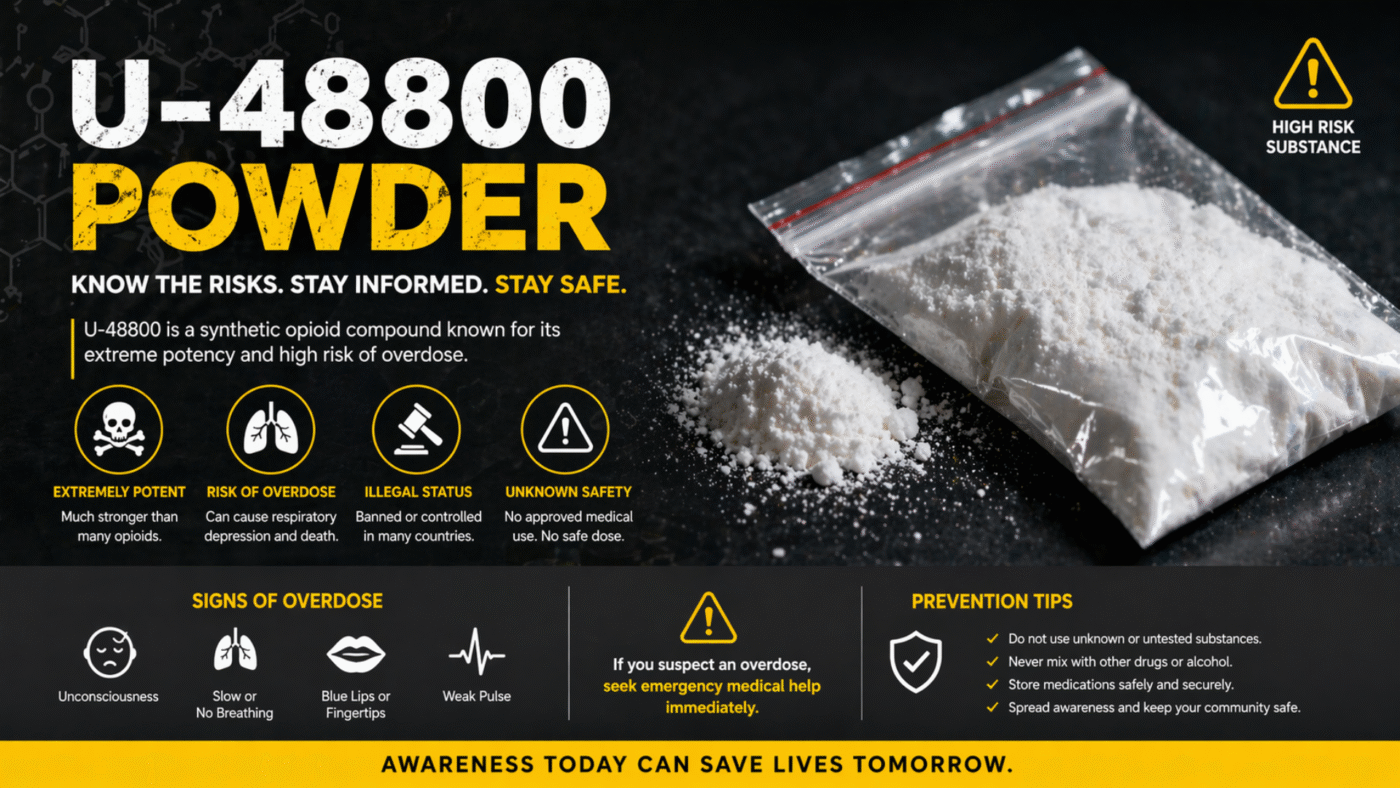
In recent years, synthetic opioids have become a growing concern across the globe due to their extreme potency and high risk of overdose. One such substance is U-48800, a powerful compound that has raised serious health and legal concerns.
This guide focuses on U-48800 powder risks, helping readers understand its effects, dangers, and why it is considered unsafe and restricted in many countries.
What is U-48800?
U-48800 is a synthetic opioid originally developed in laboratory settings for research purposes. It is structurally related to other potent opioids and is known for its strong effect on the central nervous system.
Unlike regulated medications, U-48800 has no approved medical use, making its presence in public circulation particularly dangerous.
How U-48800 Affects the Body
Synthetic opioids like U-48800 interact with opioid receptors in the brain. These receptors control pain, mood, and breathing.
Effects on the Body
- Intense sedation
- Pain relief (short-term)
- Slowed breathing
- Euphoria (temporary)
However, these effects come with severe risks, especially when misused.
Major Risks of U-48800 Powder
Understanding U-48800 powder risks is crucial for public safety.
Key Dangers
- Respiratory Depression
Slows breathing, which can be fatal - High Overdose Risk
Very small amounts can be dangerous - Addiction Potential
Strong dependency can develop quickly - Unknown Purity
Illicit samples may contain harmful contaminants
Legal Status
U-48800 is classified as a controlled or banned substance in many countries due to its risks.
Global Legal Overview
| Region | Status |
|---|---|
| United States | Controlled Substance |
| Europe | Banned/Restricted |
| India | Not approved / illegal use |
| UK | Illegal |
Possession, sale, or distribution may result in serious legal consequences.
Why U-48800 is Especially Dangerous
Unlike regulated medications, substances like U-48800 are often produced without quality control.
Key Concerns
- No dosage guidelines
- No medical supervision
- Risk of contamination
- Often mixed with other drugs
This makes its use unpredictable and extremely unsafe.
Comparison with Medical Opioids
| Feature | U-48800 | Medical Opioids |
|---|---|---|
| Approval | Not approved | Approved |
| Safety Testing | None | Extensive |
| Dosage Control | Unknown | Regulated |
| Risk Level | Very High | Controlled |
Signs of Opioid Overdose
Recognizing overdose symptoms can save lives.
Warning Signs
- Slow or stopped breathing
- Unconsciousness
- Blue lips or fingertips
- Weak pulse
Immediate medical attention is critical in such cases.
Harm Prevention Tips
While avoidance is the safest option, awareness is key.
Safety Guidelines
- Never use unknown substances
- Be aware of legal consequences
- Seek medical advice for pain management
- Educate others about risks
Public Health Perspective
Health organizations worldwide warn against the use of synthetic opioids like U-48800 due to their unpredictable and life-threatening effects.
Raising awareness about U-48800 powder risks helps reduce harm and prevent misuse.
Final Thoughts
U-48800 is not a safe or approved substance. Its high potency, lack of regulation, and serious health risks make it extremely dangerous.
Understanding U-48800 powder risks is essential for making informed decisions and protecting yourself and others from potential harm.
Read More:
Dermorphin 5mg: A Complete Guide to Effects, Risks, and Research
PMK (3,4-Methylenedioxyphenylpropan-2-one): Complete Guide to Uses, Risks, and Legal Status
Dermorphin 5mg: A Complete Guide to Effects, Risks, and Research
